
Compasso d’Oro for the Department of Design and the School of Design

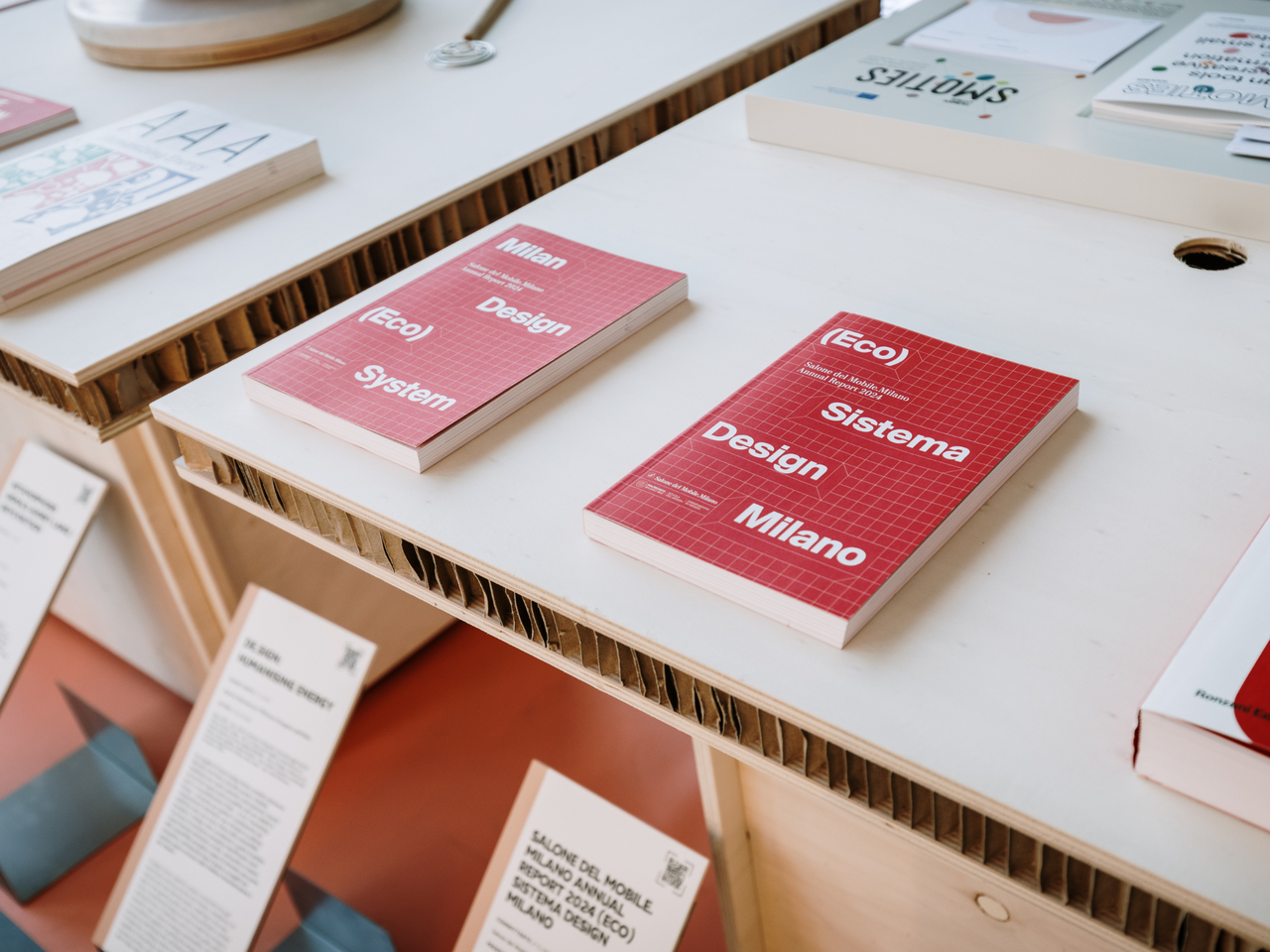
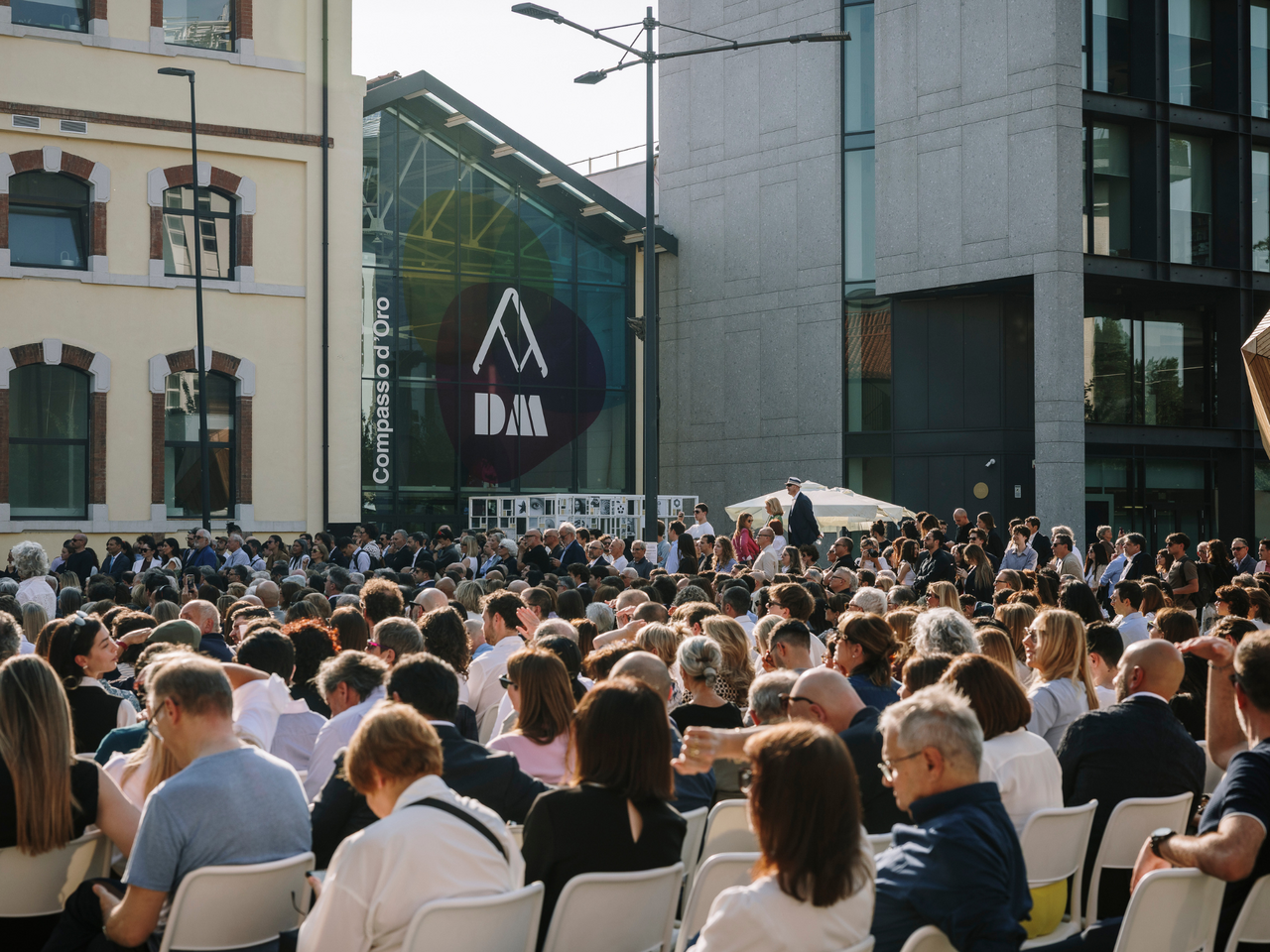
Italy’s most coveted design award returns to Politecnico di Milano. Today, the XXIX ADI Compasso d’Oro Award was presented for the “Salone del Mobile.Milano Annual Report 2024 (Eco)Sistema Design Milano”, the first annual report to systematically investigate the impact generated by the event on the local area, conceived and promoted by Salone del Mobile.Milano and produced with the scientific support of the Department of Design and the School of Design of Politecnico di Milano.
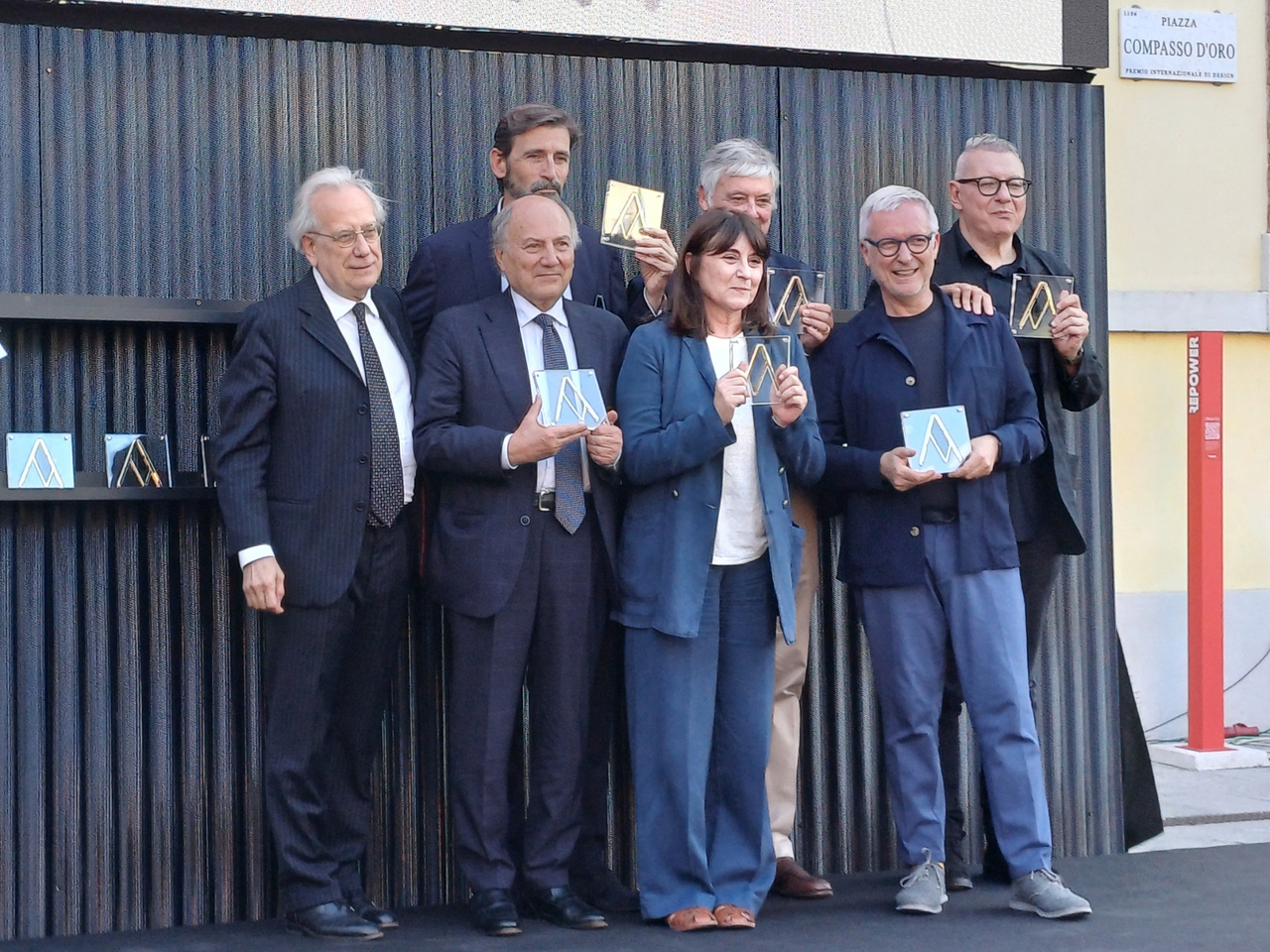
Collecting the award on behalf of the Politecnico di Milano team (which also includes Massimo Bianchini, Francesco Leoni, Carla Sedini) were professors Francesco Zurlo, Dean of the School of Design, and Stefano Maffei, Full Professor at the Department of Design and Director of Polifactory, joined on stage by Susanna Legrenzi, Communication Strategy Advisor and Curator of the Salone del Mobile.Milano Observatory, all co-creators, curators and authors of the research project. Also receiving the honour alongside them were the President of FLA Eventi Gianfranco Marinelli, together with Luca Palermo, CEO and Director General of FLA Eventi, and Marco Sabetta, Director General of Salone del Mobile, the organisation that commissioned the report together with FederlegnoArredo Eventi.
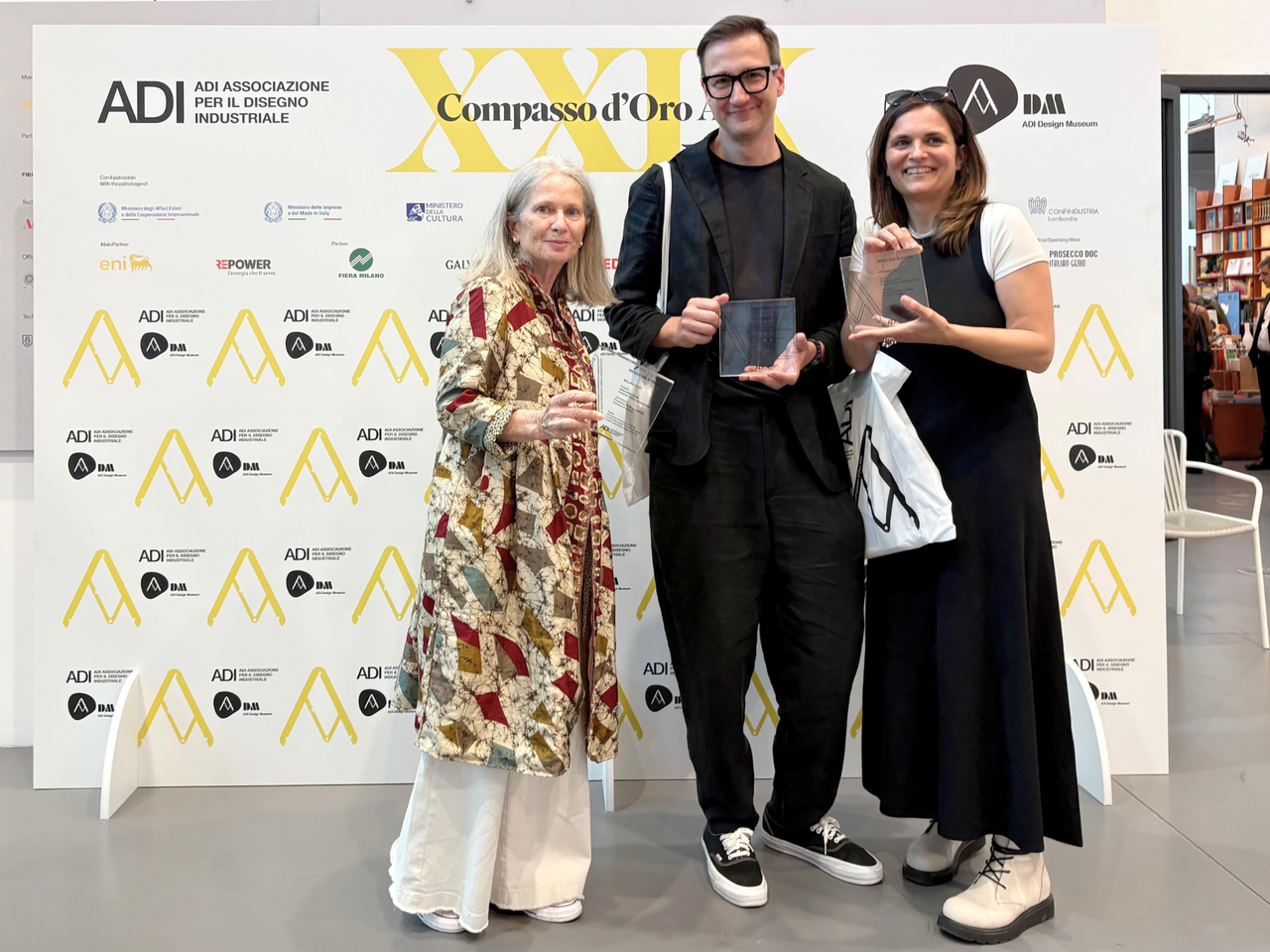
A significant recognition for the Department of Design of Politecnico di Milano, which features prominently with several projects admitted to the 2024 and 2025 ADI Design Index Selection – on display until 4 June at the ADI Design Museum – the biennial shortlist curated by the Associazione per il Disegno Industriale (ADI – Association for Industrial Design), which brings together the most significant proposals in contemporary Italian design and culminates, as noted, in the presentation of the Compassi d’Oro. Among the departmental projects selected for 2025, two others received a Special Mention: Design Futures Art-Driven Method by Marita Canina, Carmen Bruno, Tatiana Efremenko, Eva Monestier, and Milano 0.18 by Valeria Bucchetti, Umberto Tolino, Pamela Visconti.
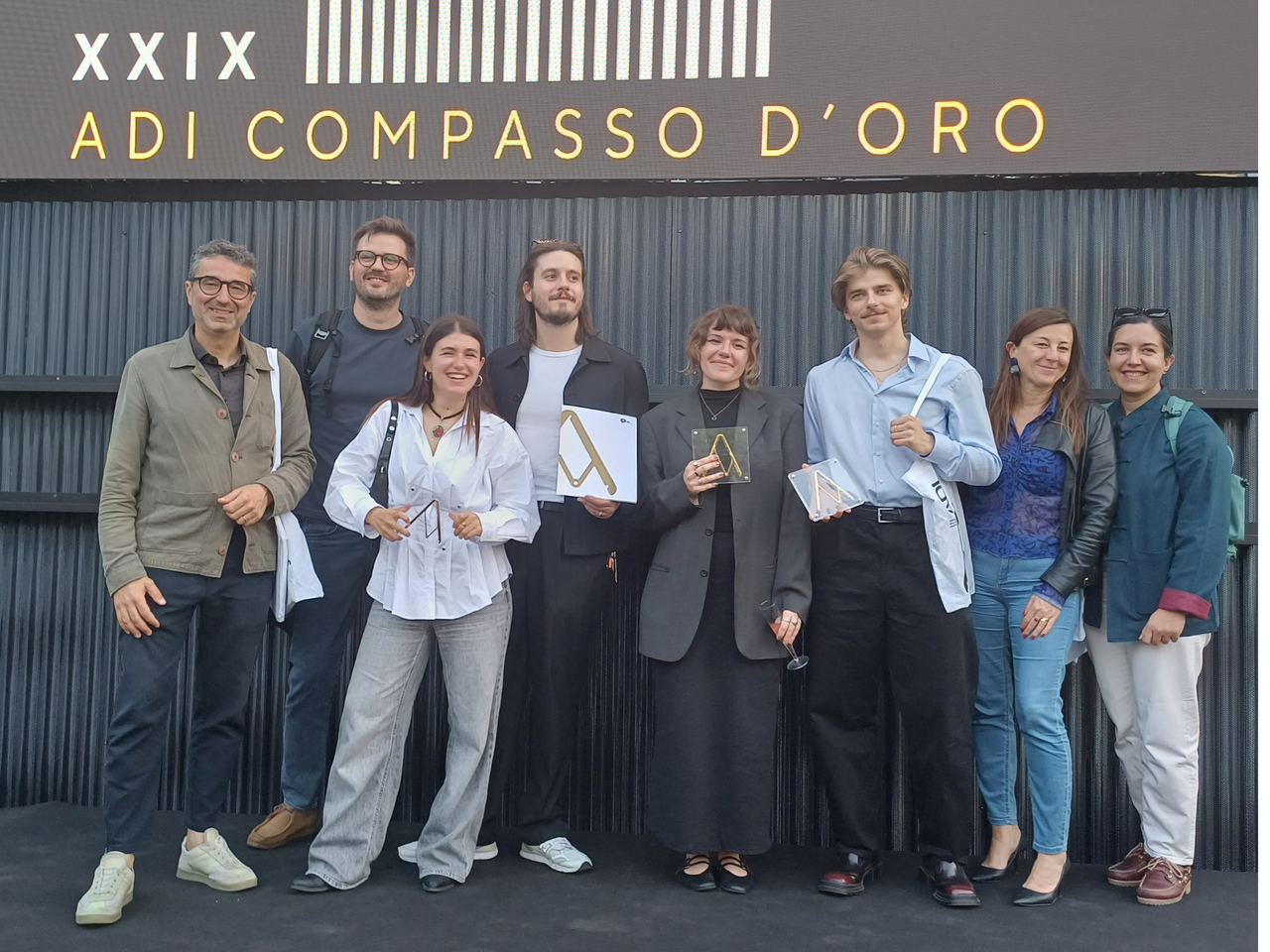
A notable achievement among young designers as well, with the award of a Compasso Young to Staineraser by Beatrice Duina, Filip Malata, Francesca Corona, and six further Young Certificates for the projects Dolfins, Flo, Hango, Sesamo and SIMMi. Overall, an outstanding result for Politecnico di Milano, which received the Compasso d’Oro Career Award in 2011 as a university for its contribution to introducing Design education at the academic level.
During the ceremony, a commemorative plaque in memory of Francesco Trabucco (1944–2021), architect and designer, and Professor Emeritus of Politecnico di Milano was also presented. He taught at the university from 1992 to 2015, initially in architecture, before making a significant contribution to establishing the first undergraduate degree programme in Industrial Design. Within the Department of Design, he served as Director of the PhD Programme in Design from 2010 to 2015.
THE XXIX ADI COMPASSO D’ORO
The first edition of the “Salone del Mobile.Milano Annual Report 2024 (Eco)Sistema Design Milano”, published in 2024, established the initial research framework: 37 data holders, 86 sources, 530 field observations compiled across more than 260 pages of analysis and over 90 charts. The 2025 edition expanded the scope of the research to include a deeper focus on design cultural production in Milan, as well as more detailed analyses of urban flows and the economic impact on the local area, with 22 data holders, 861 field observations and 31 contributors, bringing together 320 pages of research and 87 charts. In parallel, the two editions of the Working Groups promoted by the Observatory together with the School of Design of Politecnico di Milano fostered an ongoing dialogue among more than 240 stakeholders in the system, contributing to a broader shared understanding of the cultural, urban and economic transformations generated by the event.
The essence of the project lies in observing Milanese design as a complex cultural, urban and economic phenomenon, one that stands clearly apart from other international fairs and design weeks. The two editions of the Report, developed in partnership with the Salone Observatory, have made it possible to build an interdisciplinary framework capable of connecting data, territories, cultural practices and social transformations. It is in the synergy between the economic activities that sustain the event — the Salone del Mobile.Milano —, its system of stable and proactive resources — the Sistema Design Milano — and the informal model of diffused creativity, that a unique and original Milanese identity once again emerges. The city’s ecosystem fully participates in this collective added value, generating an interconnection that calls for increasing attention to environmental aspects, accessibility — physical and beyond — and urban liveability: dimensions to be explored in accordance with a logic of shared responsibility. A further significant element is the activation of an organisational mechanism capable of fostering dialogue among the various stakeholders in the ecosystem, who often lack the moments, spaces and opportunities for exchange needed to support truly sustainable growth of the ecosystem itself.
Francesco Zurlo and Stefano Maffei
Through this collective effort, the Observatory has made legible a body of data that had until now been scattered: data generated by the Salone and data made available by city-based data holders. The result is a clearer picture of the Sistema Design Milano - its capacity to attract, its vulnerabilities, and the relationships that sustain its evolution in an increasingly competitive and rapidly evolving international landscape. The next steps will move towards ever more in-depth analyses, complementing the research with concrete design initiatives aimed at sharing best practices and strengthening the ecosystem.
Susanna Legrenzi, Curator, Salone del Mobile. Milano Observatory
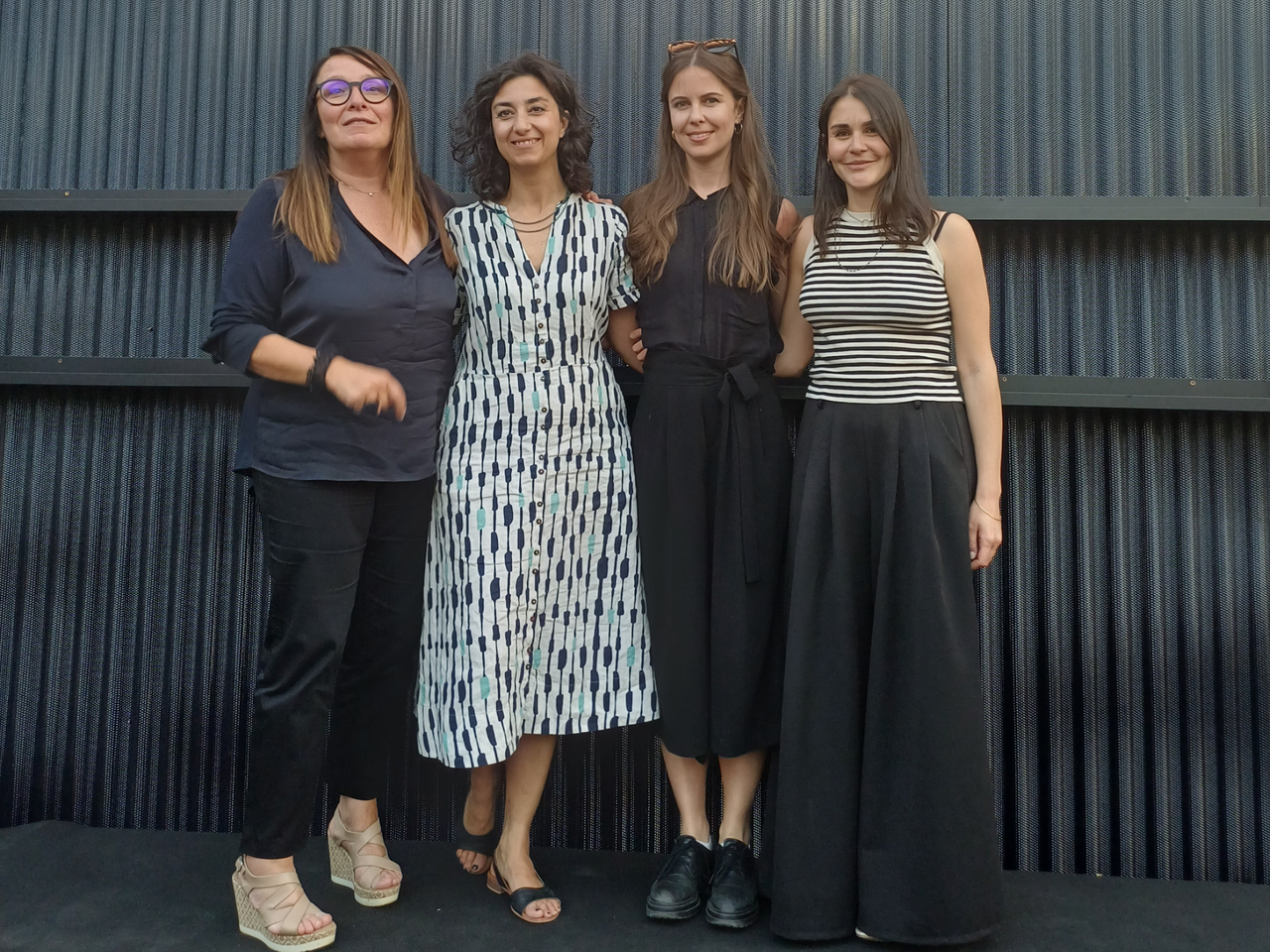
It was created to help organisations, researchers and creative practitioners imagine alternative futures and transform them into concrete design visions - explains the professor - By integrating art, futures thinking and design, the method activates new forms of collaboration capable of interrogating emerging technologies and transforming them into innovation with cultural, social and strategic impact.
Marita Canina
The project promotes collaboration between artists, designers, technologists and companies, and is structured in four phases (Horizon Scanning, Visioning, Ideating, Prototyping) supported by AI.
Milano 0.18 is a generative identity project for services provided by the City of Milan targeting children and adolescents (ages 0-18), developed in both digital and physical formats. The communication system made it possible to experiment through the involvement of micro-communities and automated generation tools, creating identity communication elements based on the interplay of sensory registers, multimedia transpositions and spatial dimensions.
This identity project was developed as a mechanism capable of generating participation, recognition and a sense of belonging. It must therefore be considered a founding component of the design process of the overall Milano 0.18 system. From the very beginning, the involvement of children and young people was central to building an open, inclusive and contemporary language able to transcend the conventional codes of institutional communication. The ADI Special Mention recognises the role of communication design in redefining the relationship between public administration and younger generations, making them active participants in the construction of their own social identity.
Valeria Bucchetti, Scientific Director of the project
THE COMPASSO YOUNG
Staineraser, winner of the Compasso Young and designed by Beatrice Duina, Filip Malata and Francesca Corona, is a wall-mounted device for stain removal in public restrooms. Using ultrasound, water delivery and suction, it provides immediate and effective cleaning. It removes stains from clothing without chemicals, fabric damage or lengthy waiting times. Safe, eco-friendly and fast, it enhances the user experience and promotes sustainability in public sanitary facilities. The students were guided by professors Venanzio Arquilla, Emanuele Magini, Innocenzo Rifino, Maximiliano Ernesto Romero, Emmanuele Villani.
It is always a source of great satisfaction to see the quality of the projects developed by the students of our School recognised through the Compasso d’Oro, together with the professors who guided them. The Compasso d’Oro Young and the five Special Mentions reflect the image of a design practice capable of identifying new opportunities for innovation across various aspects of everyday life, offering pragmatic and intelligent responses that are equally attentive to the quality of experience. Through themes that run across daily life - from garment care to living, from cooking to wellbeing - the projects outline design approaches capable of uniting technological innovation, sustainability and sensitivity to contemporary behaviours.
Anna Meroni, Vice-Dean of the School of Design at Politecnico di Milano
YOUNG CERTIFICATES – THE STUDENTS
Dolfins: Giulia Corti, Anna Galli, Thomas David Short, Filippo Tofacchi, Xinlu Yang, supervised by professors Francesco Zurlo, Barbara Del Curto, Alessandro Perrone
Flo – Flexible Low-Profile Orthosis: Giorgio Sbaraini, supervised by professors Patrizia Bolzan and Carlo Emilio Standoli
Hango: Matilde Molinari, Simone Micozzi, supervised by professors Venanzio Arquilla, Emanuele Magini, Innocenzo Rifino, Maximiliano Ernesto Romero, Emmanuele Villani
Sesamo: Beatrice Sveva Bacuzzi, Damiano Calloni, Giulia Corti, Anna Galli, Alessandro Grassi, supervised by professors Laura Anselmi, Patrizia Bolzan, Giovanni Giacobone
SIMMi: Paolo Massacci, supervised by professors: Venanzio Arquilla (coordinator), Emanuele Magini, Emmanuele Villani, Innocenzo Rifino
ZEA: Simona Invitti, Elisa Paganoni, Chiara Branca, Benedetta Crociani, Matilde Davoli, Eleonora Versitano, supervised by professors Francesco E. Guida, Pietro Buffa di Castelalto, Alessandro Masserdotti, Giacomo Scandolara
Download the 2024 Annual Report
Download the 2025 Annual Report